Quick Cool Down Stretch Fitness Health Track
Workout Description
As you may already know, stretching is an integral part of any fitness routine and there are many different styles and ways to do it. Trying to decide which style to use and when can be very confusing. We have made one choice easy
for you by creating a cool down stretch routine.
This routine utilizes non-corrective stretches (a short duration hold that wont loosen your joints) to help release tight muscles and promote circulation to flush out waste products created while exercising. This routine is not to
increase flexibility but instead to give you a way to bring down your heart rate and core temperature at a controlled pace to give the body time to filter out waste products that can increase the intensity and duration of soreness
and stiffness. This routine is also intended to give just enough of a stretch that though it may not increase flexibility, it will help you maintain your current flexibility which often diminishes when muscle tissues are damaged as
happens with strength training, HIIT, plyometric training, Kettlebell training, and so on.
In the following section we have listed each exercise that is included in this routine, in order, and what part of your body that each move focuses on (i.e. where you should feel it).
Stretches included in this routine:
Chest Cross Arm Swing: When combined with side steps or walking in place, this is a great way to keep the heart rate elevated slightly so it can more effectively push waste products to the kidneys and liver while
taxing your body only slightly as to not create any excessive waste itself. You will primarily feel this in your chest and the front of your shoulder when your arms are pulled back behind your ribcage and in the rear of your
shoulder and upper back when your arms are crossed over in front of your ribcage. Just be sure to move slowly and alternate which arm is on top when your arms are in front of your body.
Wide Toe Touch: With your feet wider than shoulder width you stretch a slightly different part of your lower back, hamstring (back of the thigh), glute (butt) and calf (only slightly) than you would when doing a
regular toe touch (aka straight leg hang) with your feet together. Try modifying this by pointing your toes out or in to target different areas of your legs, back, and hips.
Squatting Glute Stretch: Though this stretch requires a bit of extra balance and control to do without assistance, it is a great way to stretch deep into the glute (butt) muscles and also will hit parts of the lower
back. Start with only a shallow squat then build up over time until you have the flexibility and strength to get to a full squat.
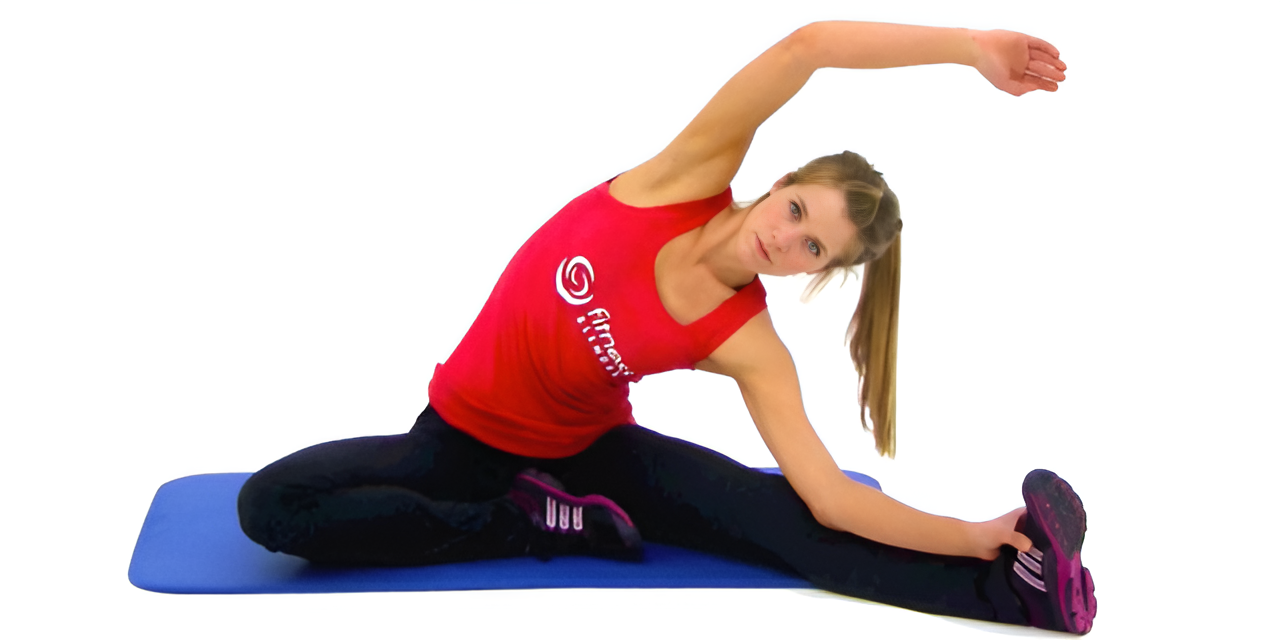
Inside Thigh Stretch: This position gives you the same benefits of dropping down to do the side splits (or trying anyway) but without the uncomfortable feeling by focusing on only one leg at a time. With one leg
bent you are able to focus on getting the stretch on the inside thigh/groin of the straight leg. To intensify the move, you don’t need to drop further into a side lunge, instead just focus on dropping your hip lower (on the side
with the straight leg).
Lunging Hip Flexor Stretch: The hip flexor (front of the hip joint) can be a hard location to stretch properly but this position does a really good job of isolating the hip flexor one side at a time. The key with
this position is to keep the back leg straight (this is the side of the body where you will feel it). To intensify the pull, lunge lower and/or lean back slightly. Just be careful to move to the identical position on the opposite
side.
Standing Quad Stretch: This is another position that can be a bit challenging for balance without any assistance but it is a great way to target the quadriceps (the front/top of the thigh). Only pull your heel as
close to your butt as you can without your knee feeling uncomfortable; don’t pull too hard as it can over compress and damage/loosen your knee joint. Once you have a slight stretch, pull your knee back behind you (using the muscles
in your leg) to intensify the feeling in the hip and quadriceps.
Side Bends: This motion targets the obliques as you lean sideways. It can be modified to incorporate the outer thigh as well by bringing your foot across in front of you at the same time. For example if you are
leaning to the left then pull your right leg (the same side you will feel it in) across to the left as well. This should intensify the pull on the right oblique as well as adding a pull to the right outside thigh and hip.
Arm Cross Shoulder Stretch: This motion targets the rear of the deltoid (shoulder) and the rhomboid (upper back, over the shoulder blade). Depending on the flexibility of these areas you may not feel much of a pull,
but keeping your upper arm close to your chest and pulling with the opposite arm across and away from the shoulder to be stretched should intensify this motion.
Overhead Tricep Stretch: Targeting the tricep (back of the upper arm) can be difficult but this position does a good job of not only targeting the tricep but also various parts of the shoulder complex (muscles that
surround the shoulder socket). Be sure to reach back to the same shoulder as arm you are stretching to get the most tricep pull.
Wall Shoulder Stretch: Shoulder range of motion is often an issue that can limit ones ability to perform various upper body exercises properly. This position is a great way to keep from losing that range of motion
and when held for longer time periods it can help you to regain lost range of motion, allowing you more freedom of movement with the arm fully extended overhead. Just be sure to keep a flat back rather than letting it arch as this
can cause back pain/injuries if hyperextended.
Next Up Suggestions
Yoga • Coach Sarah Miller
Yoga • Coach Sarah Miller
Yoga • Coach Sarah Miller